Behind the Scenes of ATEEZ 'BAD' MV: Why 'On-set LiDAR Data' Becomes the Blueprint in VFX Pipelines
Shortening Production Lead Time and Costs through a Parallel Workflow
Hello, we are 75mm Studio.
Recently, our team conducted high-precision on-set 3D data acquisition on the set of ATEEZ's 'BAD' Music Video. The key mission for this project went beyond simply capturing the site's physical appearance—it was to construct high-precision geometry-based LiDAR data that post-production VFX studios can immediately integrate into their pipeline.
In today's post, we will explore technically why leading global VFX studios insist on on-set LiDAR data from the earliest stages of production, and how this data parallelizes the entire pipeline to dramatically reduce production timelines and budget.
1. Technical Necessity: Why VFX Pipelines Require LiDAR Data
In the VFX workflow, precisely aligning live-action plates with CG elements requires extreme mathematical accuracy. LiDAR scan data provides the 'Ground Truth'—the absolute spatial reference point—for every downstream process.
- Maximizing Matchmove Solving Accuracy: When reconstructing camera tracking paths in plate footages using camera tracking tools (such as 3DEqualizer, PFTrack, etc.), tracking drift frequently occurs due to cumulative calculation errors under aggressive camera moves or severe lens distortion. By importing LiDAR 3D Point Clouds as survey data into the background and aligning feature points, camera solver precision can be pushed to its absolute physical limits.
- 1:1 Metric Scale Alignment: When building massive virtual environments (digital sets) that seamlessly extend physical sets, layout artists and environment TDs (Technical Directors) need precise real-world dimensions and positional coordinates. Layouts built on actual measurement data provided by LiDAR ensure 100% alignment in lens distortion parameters and spatial scale between virtual and live-action cameras.
- Securing Collision Proxies for FX Simulations: When debris from explosions hits physical walls or digital characters interact physically with the environment (e.g., Houdini Dynamics), collision meshes of the actual set are essential for physics engines. By retopologizing LiDAR-acquired geometry into accurate, low-polygon proxy meshes, the precision of virtual physical simulations is greatly enhanced.
- Precise Lighting Projection and Holdout Processing: To achieve natural occlusion—where CG assets are seamlessly hidden behind physical structures—and to accurately cast CG shadows onto live-action environments, holdout geometry (shadow mattes) operating within render engines (Arnold, RenderMan, etc.) is required. Meshes derived from accurate LiDAR positional data perform this role flawlessly, bringing compositing mismatches close to zero.
2. Drastically Reducing Production Time and Costs via Parallel Workflows
The most practical and commercially powerful benefit of adopting LiDAR data lies in the 'Parallelization' of the VFX pipeline.
Traditional VFX pipelines follow a linear structure: Live-Action Footage -> Edit Lock -> Matchmove/Camera Tracking -> Asset Placement -> Lighting -> Compositing. If upstream tasks are delayed, artists in downstream departments are forced to wait, creating an inevitable 'pipeline bottleneck' that directly inflates production costs.
However, capturing a 'Master Digital Twin' on shooting day using high-precision on-set LiDAR scanning completely breaks this linear dependency.
[Traditional Linear Workflow]
Footage Received ──> Camera Tracking Done ──> Modeling/Layout Starts ──> Simulation/Lighting (Bottlenecks & Idle Time)

[LiDAR-based Parallel Workflow]
LiDAR Scan Secured ──> [Master Digital Twin Asset Distributed]
                       ├──> Asset Team: Immediately starts modeling based on real-world dimensions
                       ├──> Layout Team: Runs virtual matchmove & blocking prior to edit lock
                       ├──> FX Team: Pre-builds physics simulations on proxy meshes
                       └──> Lighting Team: Builds virtual light presets matched to set lighting
- Simultaneous Task Kickoff (Day 1 Start): Even before edit cuts are locked or camera tracking data is finalized, all departments (Asset, Layout, FX, Lighting) can immediately start working within the exact same verifiably accurate 3D space.
- Minimizing Trial-and-Error & Re-work: Because precision 3D geometry serves as a solid reference blueprint, the costly risk of modelers creating assets that mismatch layout scales and require re-work is eliminated.
- Shortening Final Render Lead Times: FX artists can complete simulation setups on LiDAR proxy meshes before plate tracking is returned, while the lighting team pre-places virtual light rigs. As soon as final camera tracks are ready, assembling the components leads directly to final rendering.
As a result, this parallel workflow shortens overall post-production schedules by at least 30%, preventing waste of high-value artist resources and offering a clear cost-reduction solution to lower overall project production expenses.
3. ATEEZ 'BAD' MV On-set LiDAR Capture Results
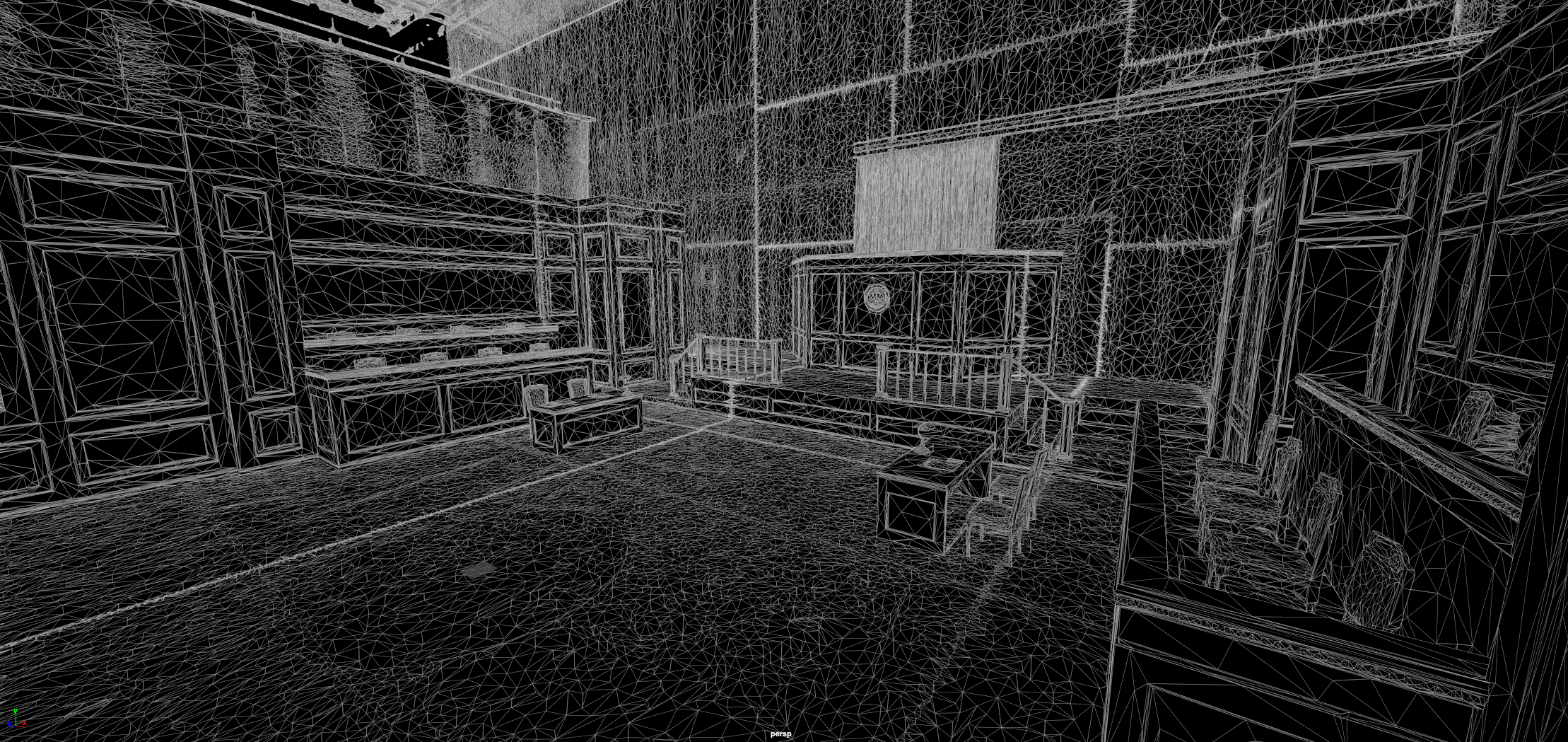
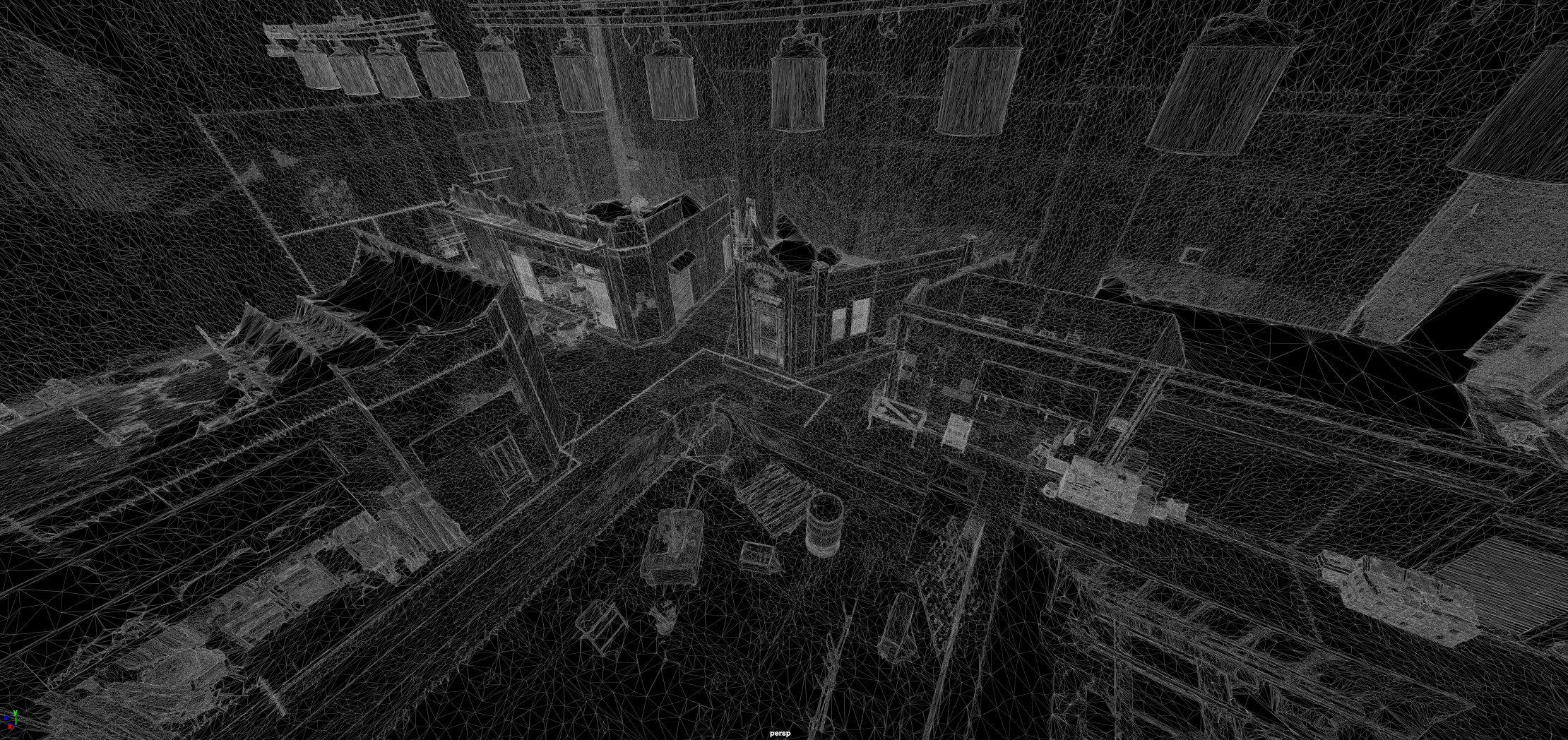
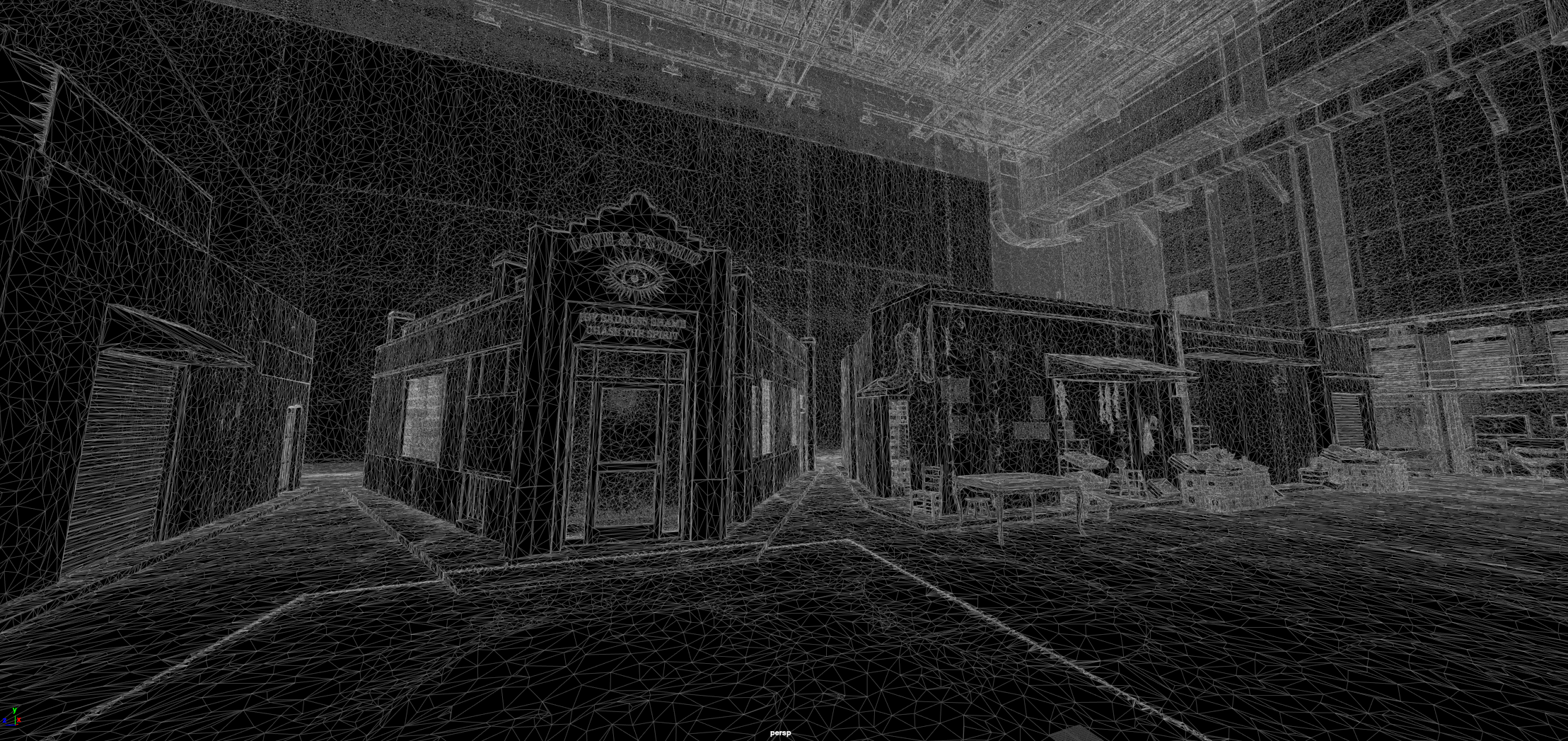
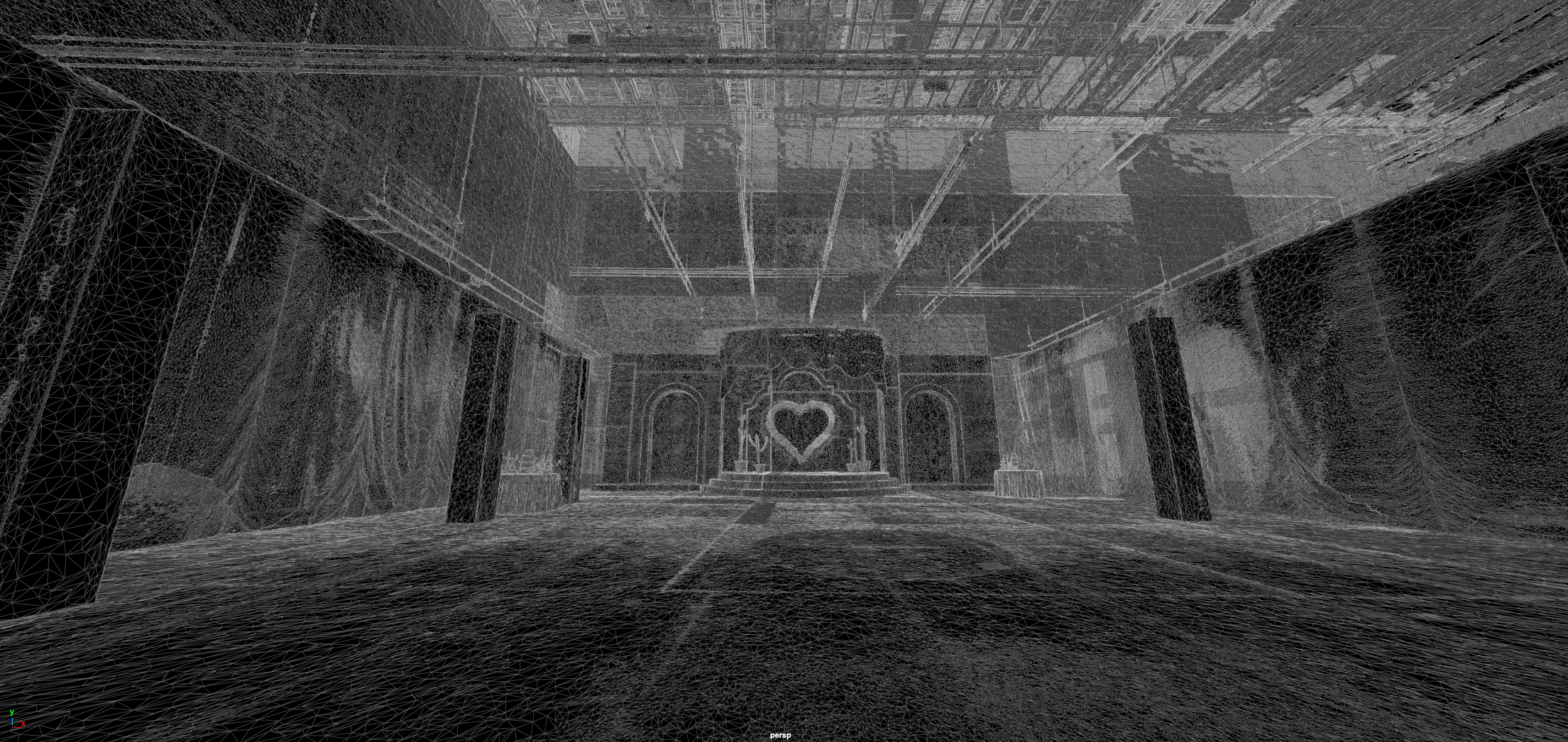
Here is the high-precision VFX-grade LiDAR point cloud and mesh dataset aligned on the set of ATEEZ's 'BAD' Music Video. The complex pipe arrangements and physical structures of the location were visualized within millimeter-level tolerance.
4. On-set Technical Innovation: Convergence with 3D Gaussian Splatting (3DGS)
In addition to traditional LiDAR scanning, 75mm Studio simultaneously captured the set using 3D Gaussian Splatting (3DGS), one of the hottest topics in current 3D computer graphics.
- While LiDAR Data delivers the mathematically perfect 'skeleton' (physical geometry and survey data) supporting the entire pipeline,
- 3D Gaussian Splatting (3DGS) hyper-realistically captures the Radiance Field—photorealistic optical reflections of neon lights and specular metallic textures on set that are notoriously difficult to reconstruct via traditional CG texturing and shading methods.
Combining these two complementary datasets dramatically speeds up post-production pre-visualization and presents an innovative tech pipeline designed for future expansion into Metaverse assets and digital twin archiving solutions.
5. SuperSplat 3DGS Interactive Viewer
The real-time viewer below is a 3D Gaussian Splatting web viewer simulation of the street set acquired and cleaned up on location by our team. Feel free to interactively control the viewer using your mouse to examine the realistic light sources and textures rendered in real time.
Technical Details & FAQ
What is LiDAR scanning and how is it used in VFX?
How does 75mm Studio process massive Point Cloud data?
What is the primary difference between Photogrammetry and LiDAR?
Why is 3D Gaussian Splatting revolutionary for spatial archiving?
Interested in this technology? Contact Us