|
Back to List
Production 2024-02-13

'Nine Studio' Tracking Marker Setup

Precision Marker Setup Case Study at a Horizontal Studio

Written by 75mm Studio

Tracking markers on set play a crucial role in the Matchmove process, serving as the primary medium connecting real and virtual spaces. At 75mm Studio, we perform marker setup during our On-set operations, and we are introducing a setup case study at 'Nine Studio' horizontal studio.
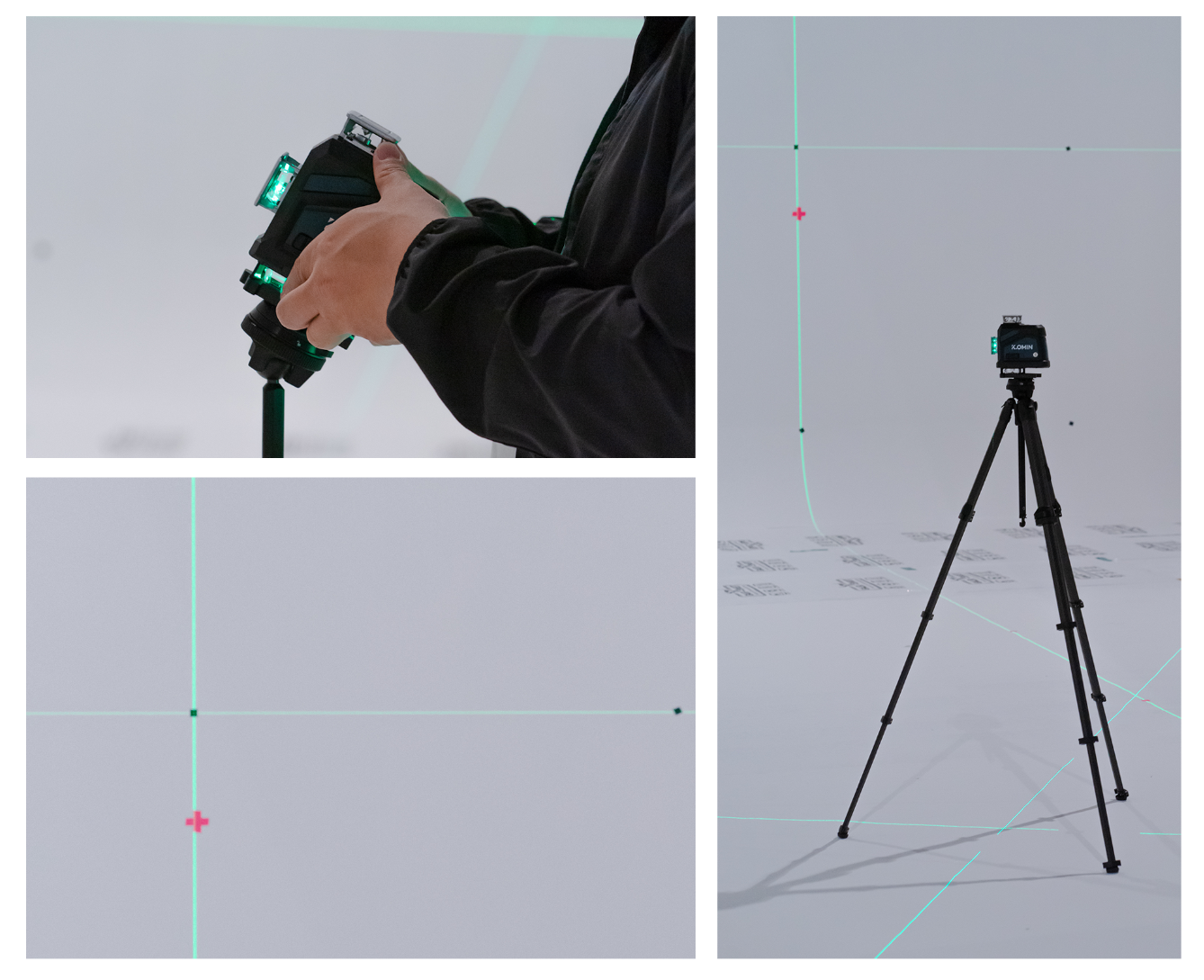
Nine Studio Marker Setup Image 01

Usually, when setting up markers on set, they are placed at regular intervals or in specific patterns. However, due to the large scale of the walls, the placement often relies solely on the worker's perception of distance. This results in irregular point positions, making it difficult for Matchmove artists to locate precise points in shots with narrow angles of view.

To improve this issue, 75mm Studio has introduced laser level equipment to optimize on-set setup for Matchmove work.
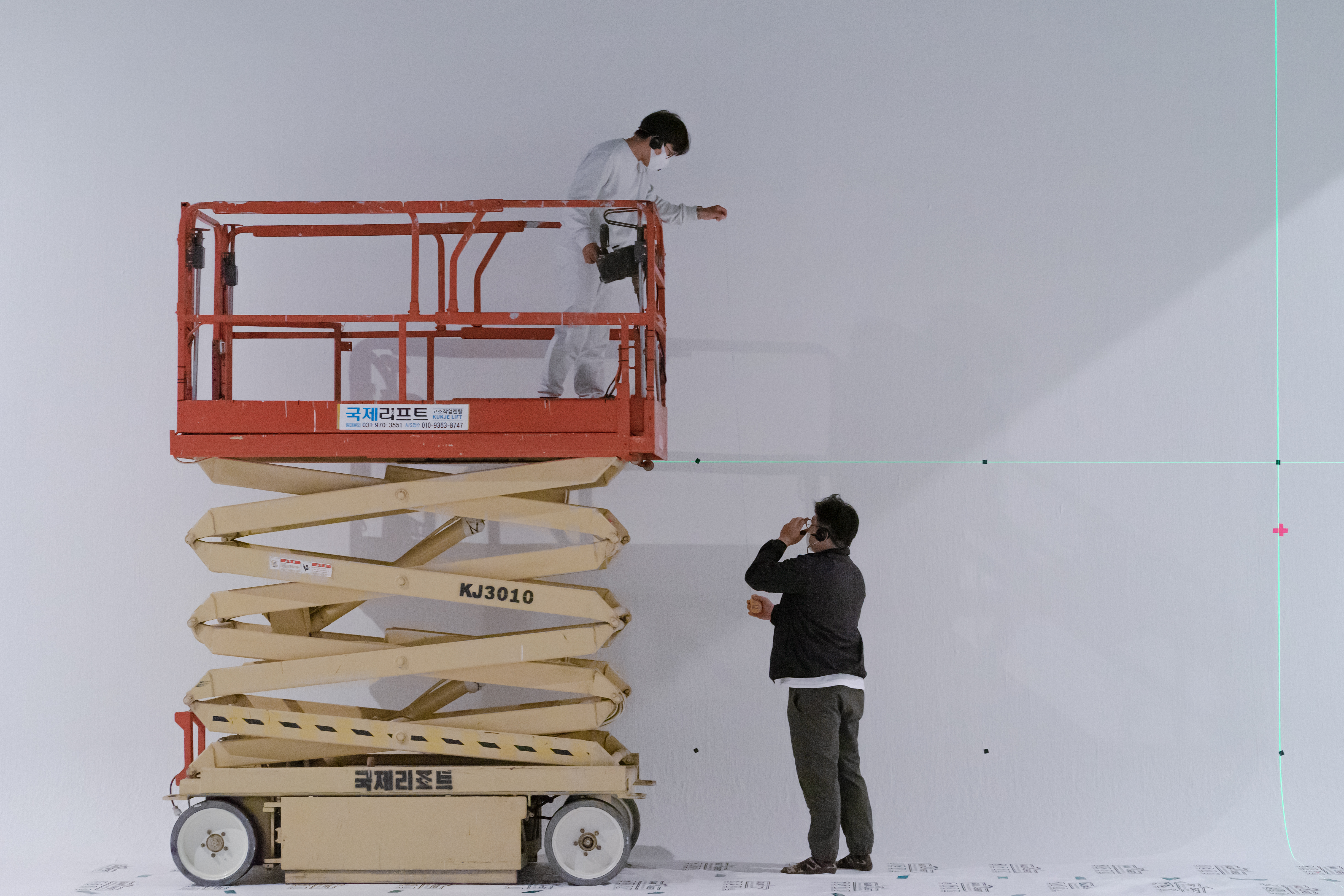
Nine Studio Marker Setup Image 02

By utilizing laser lines provided by the leveler, the vertical and horizontal intervals between points are kept consistent. This creates a standard rule for the Matchmove process, thereby boosting efficiency. Furthermore, after the marker setup is complete, we utilize LIDAR equipment and DSLR cameras to secure spatial scan data including high-quality textures.

Technical Details & FAQ

What is LiDAR scanning and how is it used in VFX?
LiDAR (Light Detection and Ranging) is an ultra-precise 3D scanning technology that uses laser pulses to measure spatial distances. In modern VFX pipelines, precise geometry data acquired through LiDAR ensures that computer-generated CGI environments match physical movie sets with zero margin of error. This maximizes the accuracy of camera matchmoving and virtual set extensions, drastically reducing post-production turnaround times.
How does 75mm Studio process massive Point Cloud data?
Raw point cloud data acquired on-site consists of billions of points, making it too heavy for standard DCC software like Maya or Unreal Engine. We run the raw data through an advanced proprietary processing pipeline that involves point registration, aggressive noise reduction, and topological lightweighting. Ultimately, the dense point cloud is converted via meshing and retopology into an optimized, highly manageable polygonal asset.
What is the primary difference between Photogrammetry and LiDAR?
While LiDAR structural scanning focuses on calculating exact physical dimensions with millimeter accuracy (the 'skeleton'), Photogrammetry focuses strictly on generating photorealistic visual textures (the 'skin'). At 75mm Studio, we employ a hybrid workflow combining the undeniable millimeter-accuracy of laser scanning with the hyper-realistic optical fidelity of photogrammetry.
Why is 3D Gaussian Splatting revolutionary for spatial archiving?
3D Gaussian Splatting is a breakthrough AI-based neural rendering technique that bypasses the limitations of traditional polygonal rendering. It easily captures incredibly complex micro-details such as translucent objects, fine foliage, and specularity. Moreover, it achieves this extreme photorealism while maintaining real-time 60fps render performance, even directly within a web browser, making it the ultimate game-changer for digital twin distribution.

Interested in this technology? Contact Us