NMIXX 'CRESCENDO' MV: From On-set Data Acquisition to 3DGS Web Viewer
Innovating VFX Pipelines & Communication through LiDAR Scanning, Marking Setup, and Gaussian Splatting
Recently, 75mm Studio participated in the new music video project 'CRESCENDO' for NMIXX. We successfully carried out the entire workflow—from acquiring on-set data, which serves as the core foundation for visual effects (VFX), to creating 3D Gaussian Splatting (3DGS) assets, the latest 3D reconstruction technology.
In this post, we share the flow of our pipeline: how a physical set was transformed into digital data to maximize efficiency, and how this data expanded into an innovative tool for inter-departmental communication as well as a web-based interactive experience.
1. Laying the Invisible Foundation: Marking Setup and LiDAR Scanning
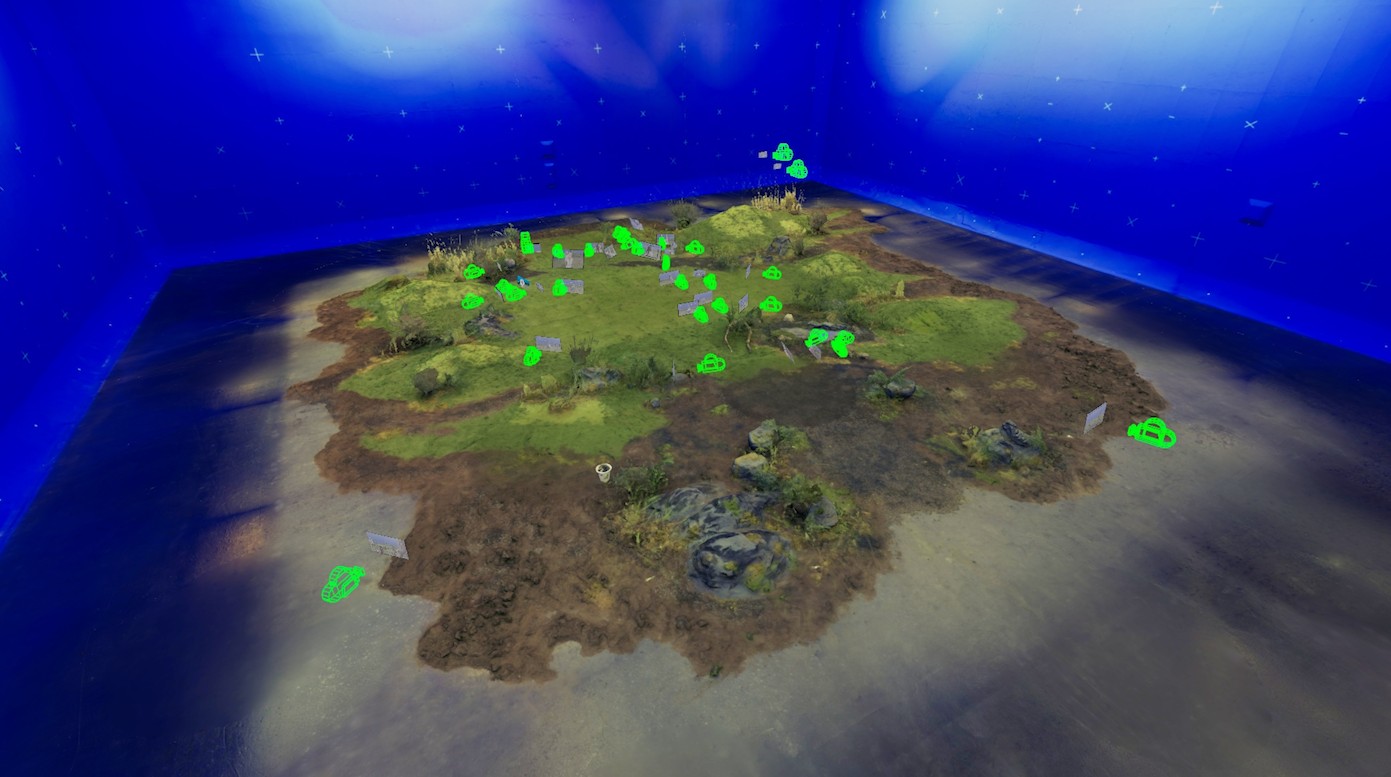
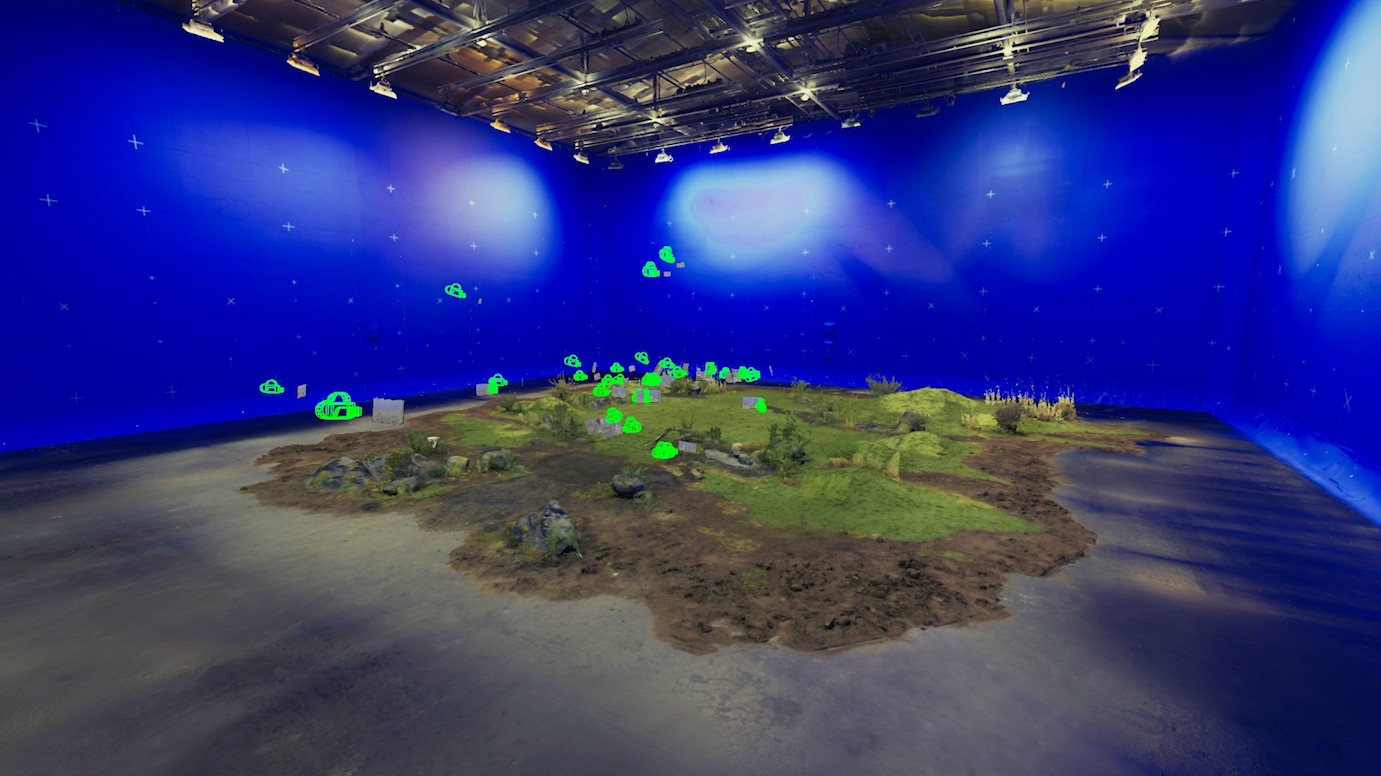
For seamless CG compositing, it is essential to bring on-set camera movements and spatial information into the digital domain without error. To achieve this, the 75mm Studio on-set team placed precise tracking markers throughout the set prior to shooting. These markers serve as anchor points for camera matchmoving in post-production.
Simultaneously with marking, we conducted a full LiDAR scan of the set. By emitting millions of laser pulses and measuring their return times to record the environment as a 3D point cloud, this process snapshots the physical scale and structure of the set with millimeter accuracy.
2. Maximizing Project Efficiency: Interconnectivity and Parallel Processing
In traditional workflows, full-scale CG production often had to wait until filming ended and offline rough cuts were finalized. However, on-set LiDAR scan data enables true 'Parallel Processing'.
Because accurate 3D spatial data (digital twin) of the set is handed over to post-production immediately after shooting, the CG team can configure layouts and test camera paths in advance without waiting for final edits.
On-set Data Acquisition ➔ Matchmove ➔ CG Asset Placement are organically linked, significantly shortening the overall project timeline while raising the quality of final deliverables.
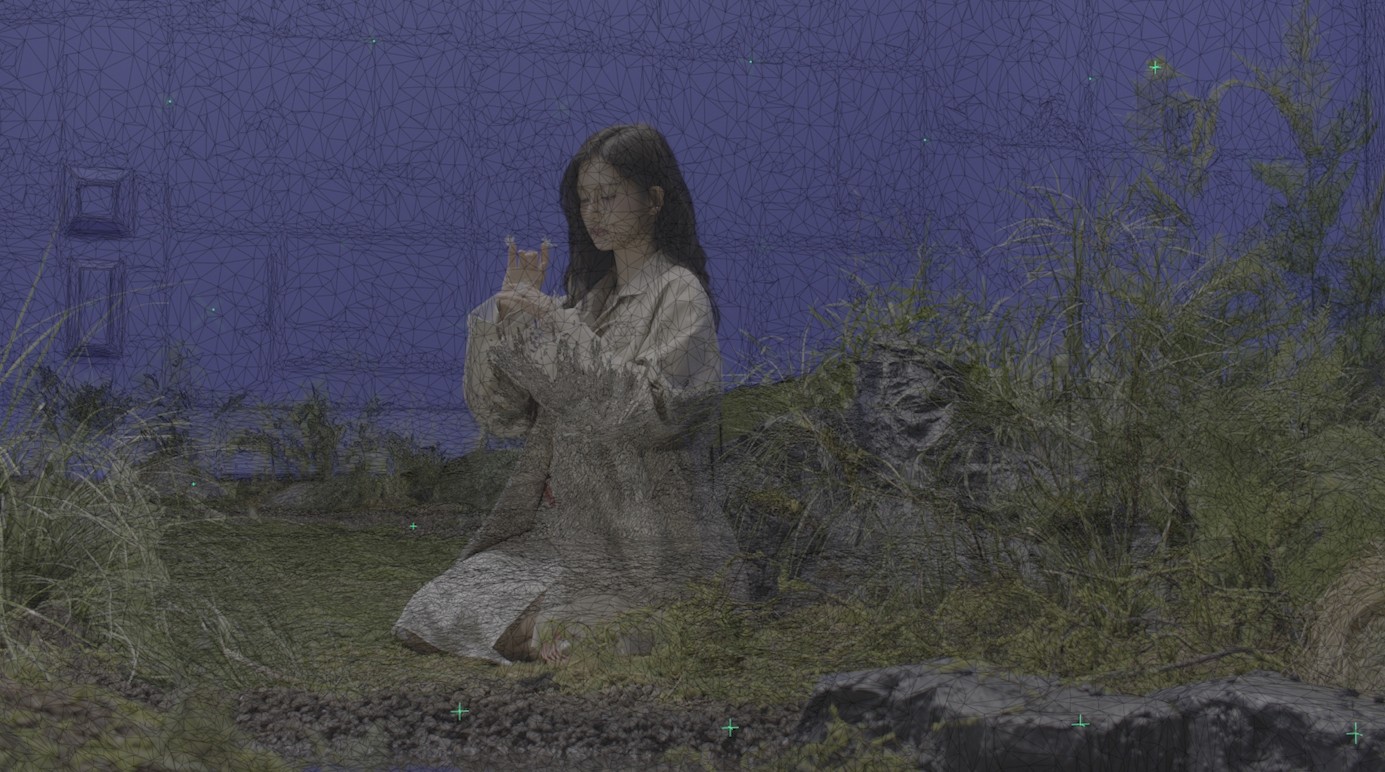
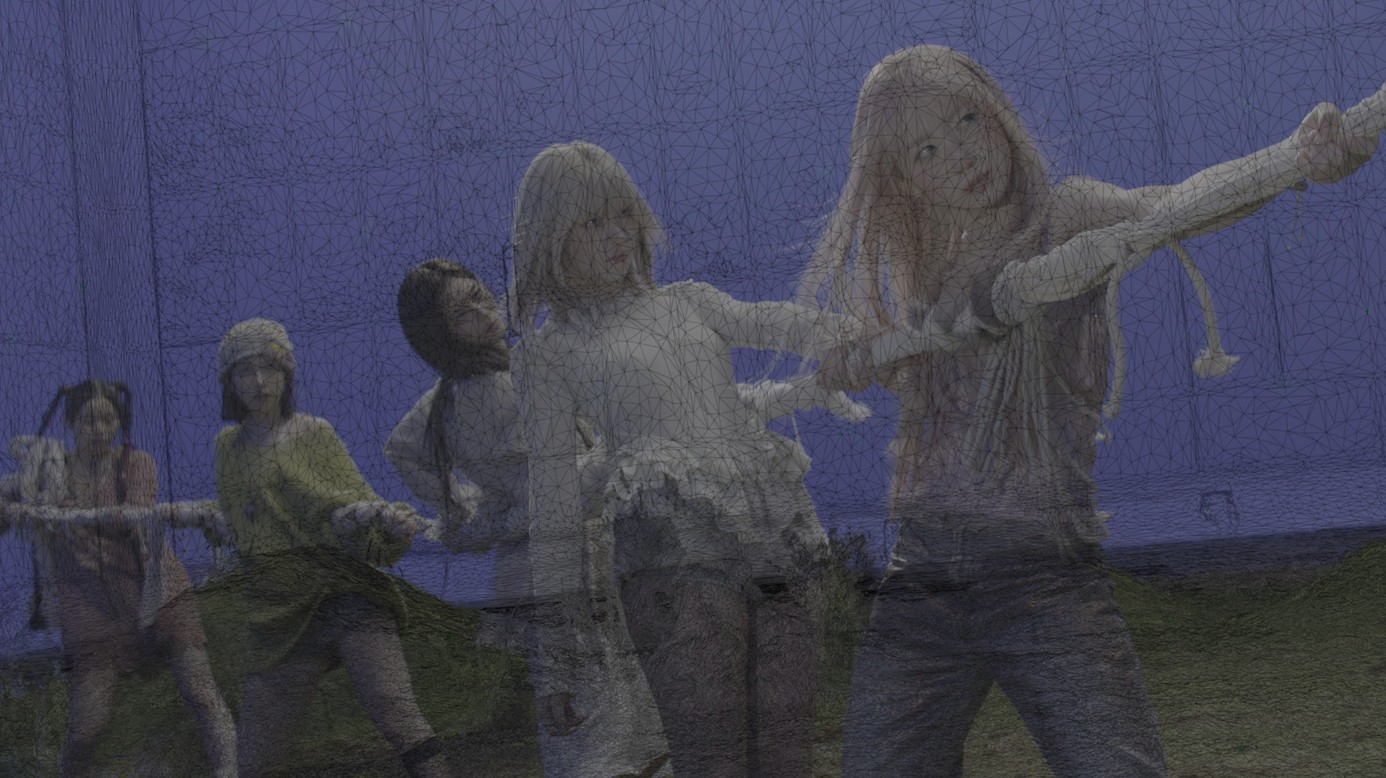
3. Gaussian Splatting (3DGS) as an Innovative Communication Tool
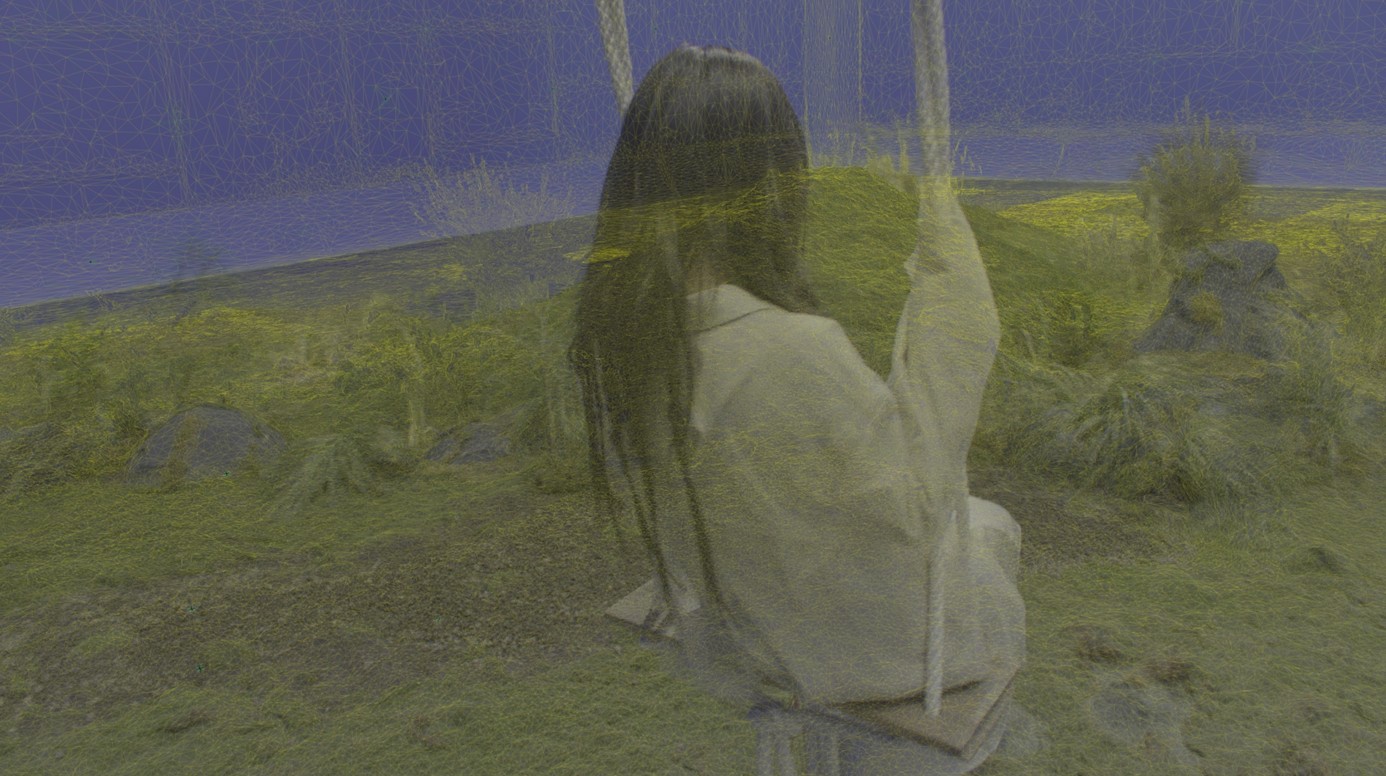
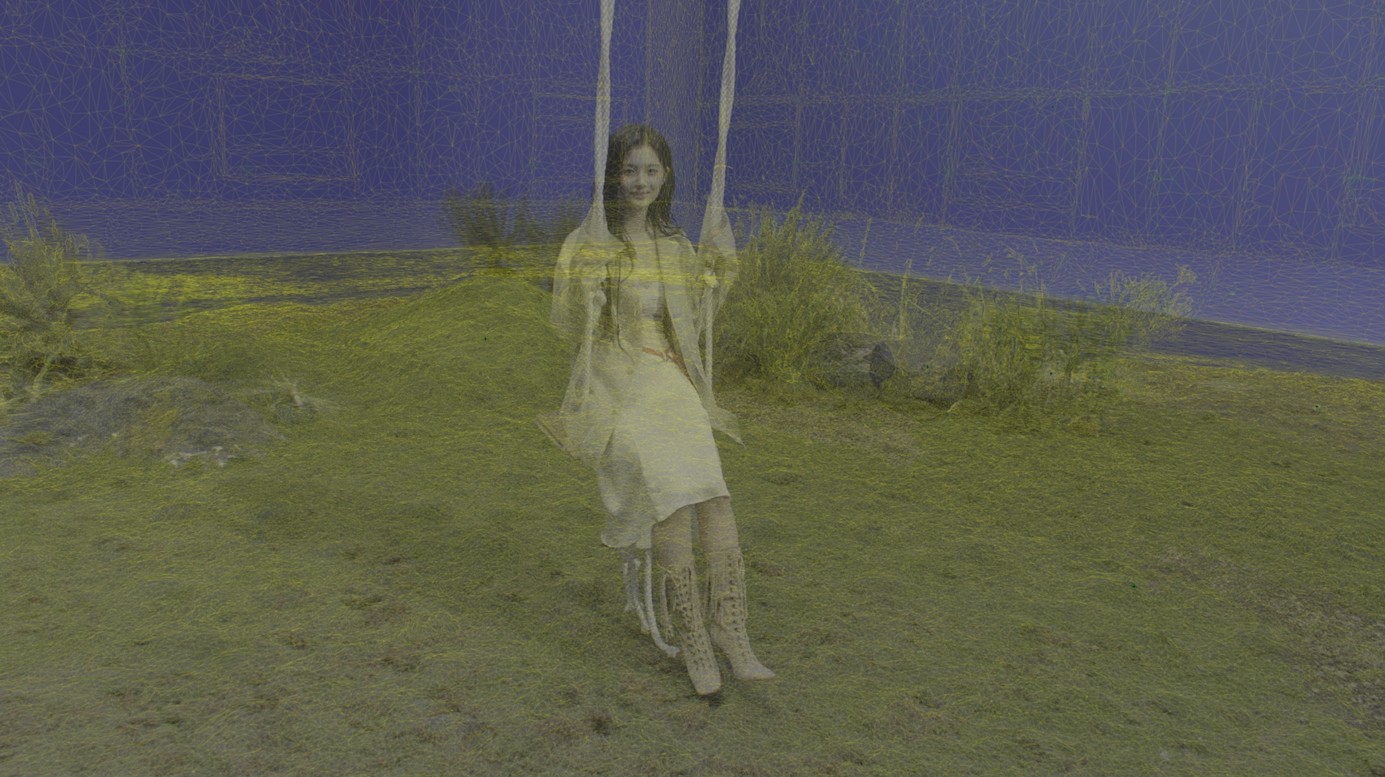
In this project, our major focus was introducing 3D Gaussian Splatting (3DGS). While LiDAR data guarantees spatial 'accuracy', 3DGS reconstructs lighting, textures, and ambiance into photorealistic 3D representations.
Technical Details & FAQ
What is LiDAR scanning and how is it used in VFX?
How does 75mm Studio process massive Point Cloud data?
What is the primary difference between Photogrammetry and LiDAR?
Why is 3D Gaussian Splatting revolutionary for spatial archiving?
Interested in this technology? Contact Us