75mm Studio's LiDAR Scan Data in RIIZE 'Fame' MV
Turning Real Sets into Digital Assets and Dreamy Visual Tools
Group RIIZE's 'Fame' performance video attracted great attention with its unique visuals. This mysterious background, which looks like reality yet like a virtual space, is data created by 3D scanning (LiDAR) the actual shooting site.
Leaving aside the complex CG production process, we have summarized two key cases of how this technology was utilized directively in the actual music video.
Usage Case 01. Digital Archiving of the Shooting Site
The first point of utilization is that the actual space was transferred directly into the computer. We precisely scanned the actual shooting set using LiDAR sensors. Through this process, the real space is saved as billions of Point cloud data.
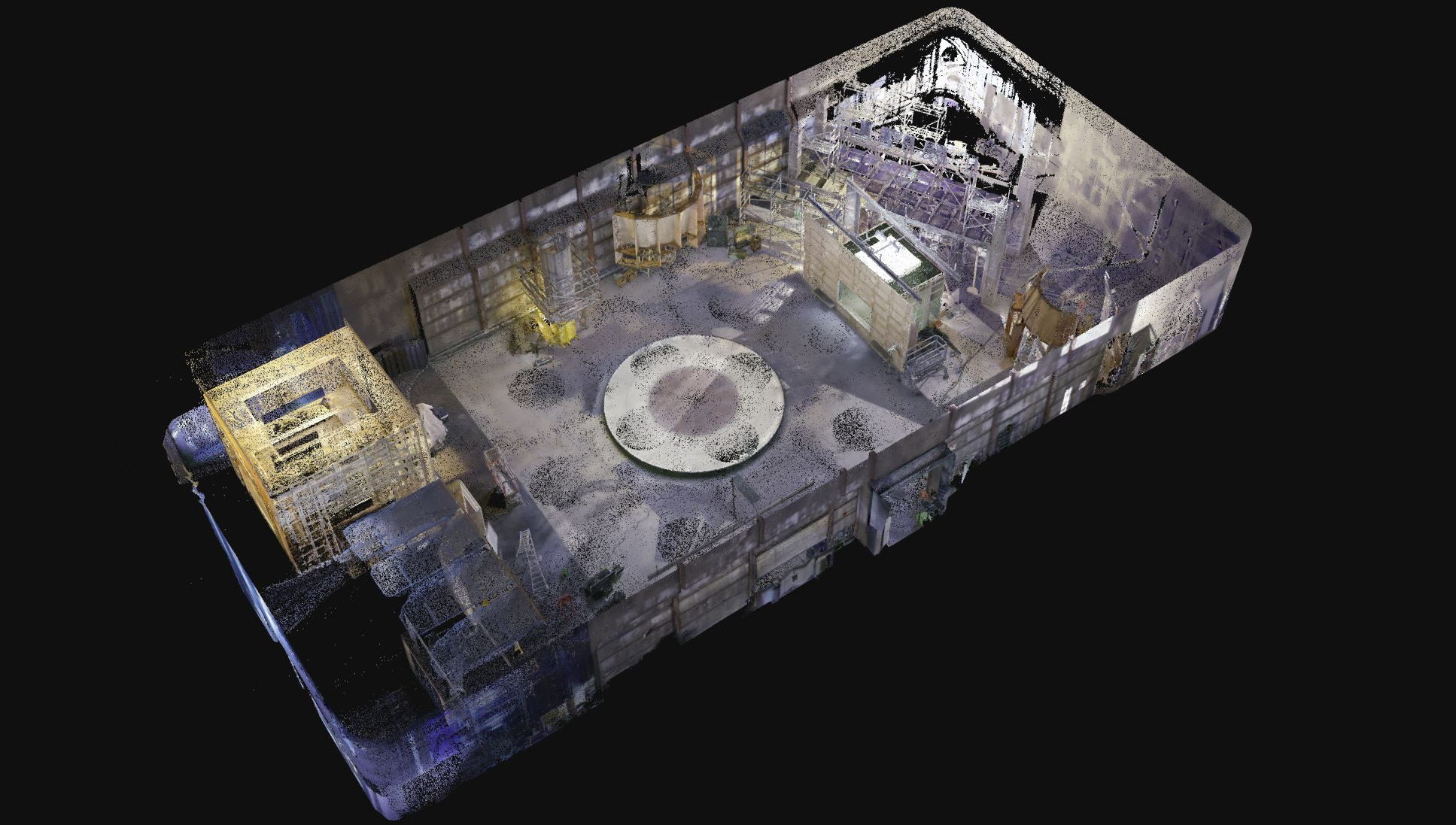 ▲ The entire actual set scanned and saved as 3D data
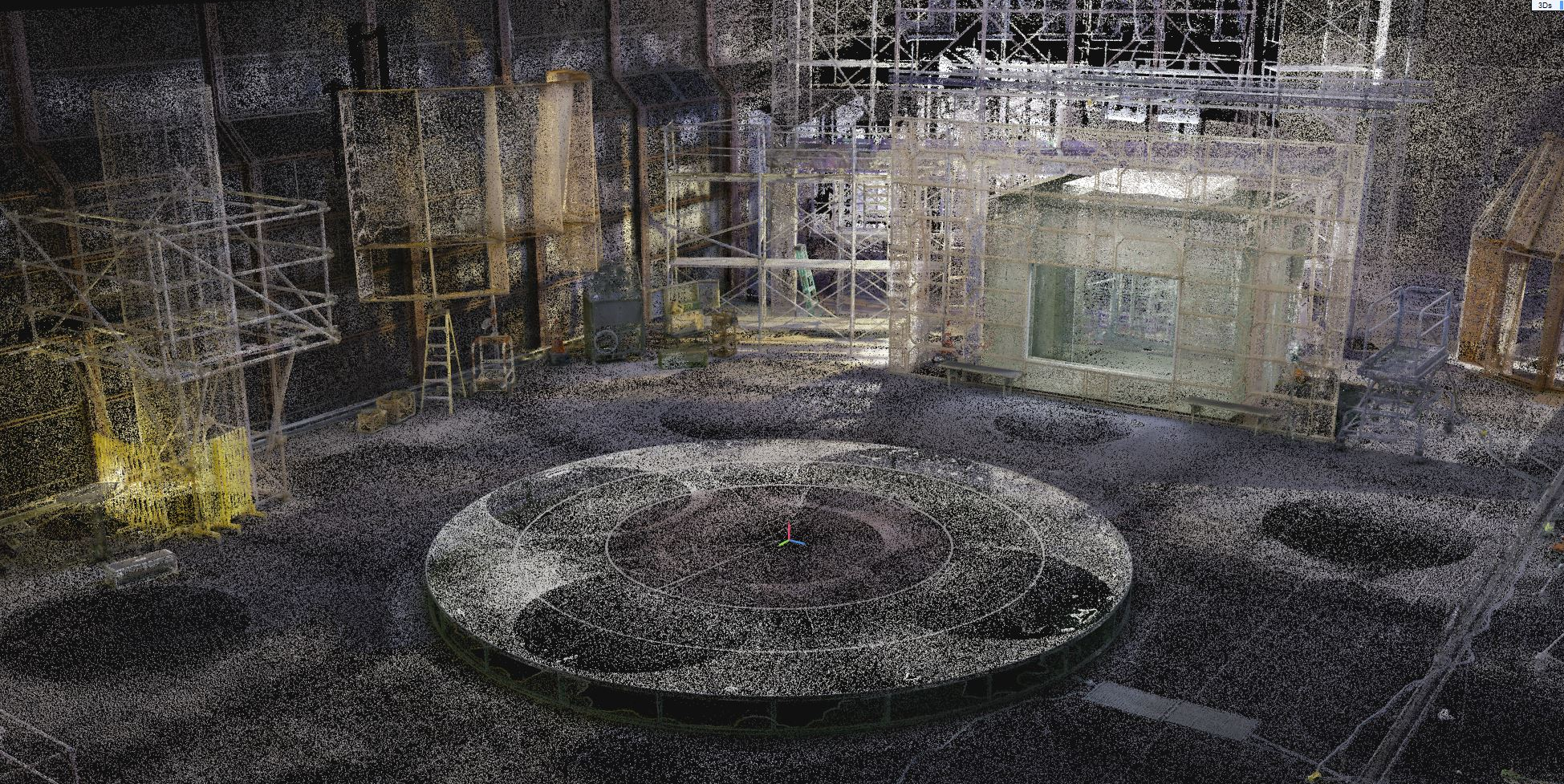 ▲ Everything from floor texture to ceiling lighting structures is recorded as is
Ordinary CG work requires drawing a non-existent space from scratch, but utilizing this method allows for free camera movement or adding effects in the digital space while maintaining 100% of the detail and scale of the actual set.
Usage Case 02. Visual Directing for Dreamy Atmosphere
The second is a case where the secured data was not polished but 'exposed as Point cloud state' to create a unique atmosphere.
General CG connects points to make smooth surfaces, but in this video, the rough texture of scattered points was rather emphasized to visually express a 'Data-fied World'.
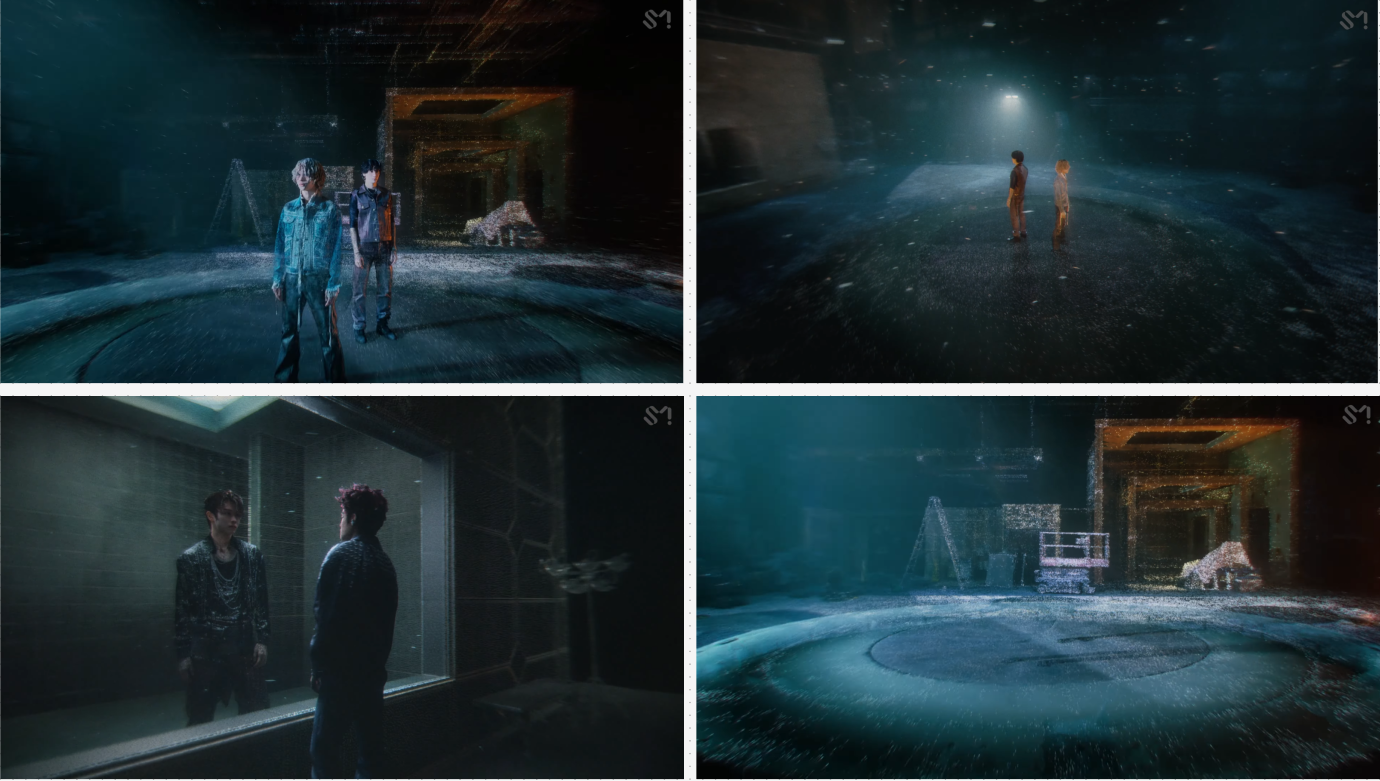 ▲ Effect where glowing points add depth in a dark space
Points glowing like the galaxy in a dark space added depth and served as an excellent background effect that made the members stand out even without flashy stage devices.
RIIZE's 'Fame' video utilized LiDAR scan data not just as technology for technology's sake, but as an excellent directing tool to show the worldview of this music video.
- Space Cloning: Perfectly transferring the actual shooting site to digital
- Visual Directing: Completing a dreamy mood mixing reality and virtuality by utilizing point cloud texture
It is a good example where cold digital data met the artist to be born as sensuous art.
Technical Details & FAQ
What is LiDAR scanning and how is it used in VFX?
How does 75mm Studio process massive Point Cloud data?
What is the primary difference between Photogrammetry and LiDAR?
Why is 3D Gaussian Splatting revolutionary for spatial archiving?
Interested in this technology? Contact Us