75mm Studio Participates in Artist Song Ju-won's <Rustling> 1:1 MR Live Performance Production
Leading Technical Production including CG/VFX, MR Application Development, and LiDAR Scan Data
75mm Studio participated as a key technical partner in Artist Song Ju-won's <Rustling> 1:1 MR Live Performance, held at the Chinese restaurant 'Itaewon Bulkkot' from November 23rd to December 11th, 2024.
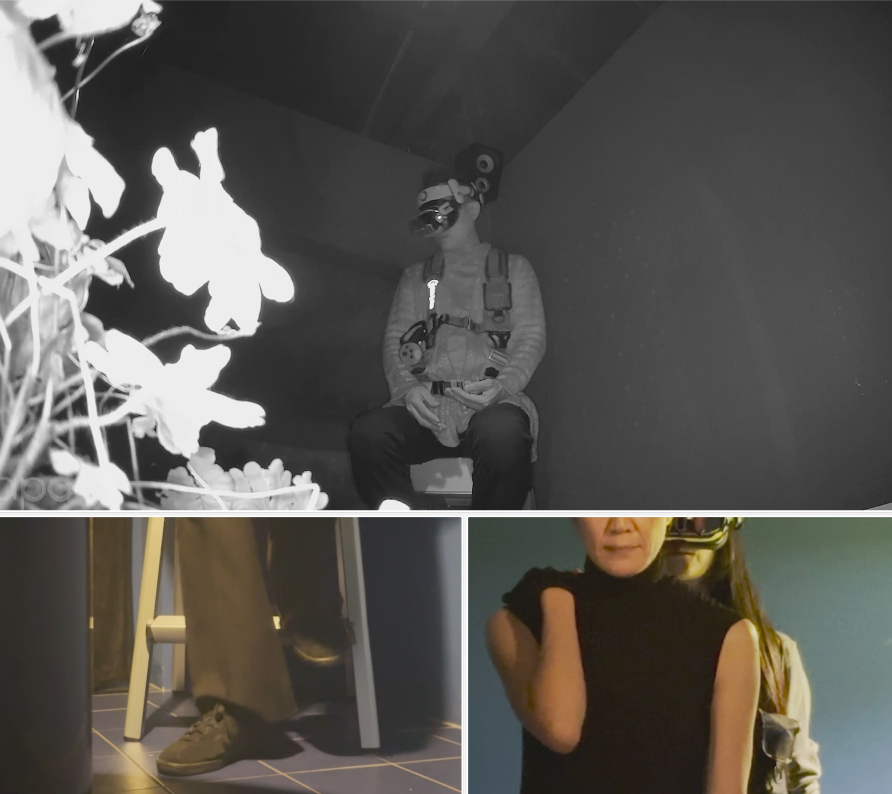
<Rustling> is a high-density performance where the audience and performer interact 1:1. It creates an audience experience that transcends sight, sound, touch, smell, and taste, moving between VR and AR for 60 minutes.
Technical Production and Advisory
75mm Studio was responsible for technical production throughout the entire process, including CG/VFX, Mixed Reality (MR) application development, and providing LiDAR scan data, as well as serving an advisory role.
We took charge of high-quality computer graphics and visual effects, which are crucial parts of virtual and augmented reality, enhancing the visual completeness of the work. We also supported smooth production by managing the entire development process of the mixed reality application played with Meta Quest 3.
In this art-technology fusion work, we helped new technologies be naturally implemented in the work, from technical R&D to the actual performance site. We contemplated together to elevate the characteristics of immersive technology that effectively utilizes immersive experiences tailored to the artist's characteristics.
Experience of MR Space-Time
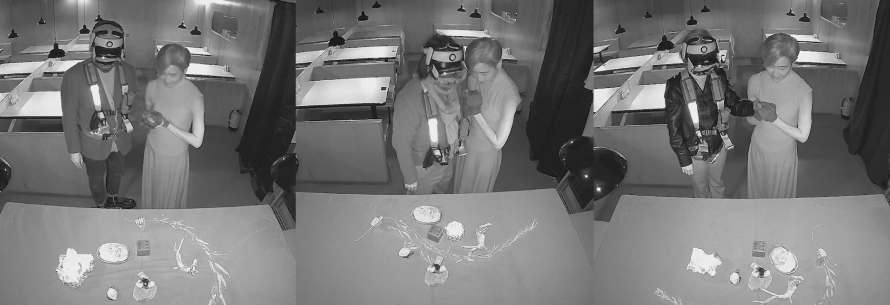
The audience traverses the MR space-time moving between VR and AR, where the performer's movements unfolding in the 3D scanned space, objects, 2D 360 filming, and on-site location are superimposed with motion capture data and chroma key implemented in the virtual space. They experience a performance that crosses multiple mediums, physicalities, and spectatorships, rather than a realistic work buried in visuality.
Background of the Work
<Rustling> is a spin-off of <Wheeing>, the 15th work of the 'Pungjeong.Gak' series that artist Song Ju-won, who has been active as a choreographer and director, has continued for over 10 years.
The work, set in the Bogwang-dong and Hannam-dong areas that will soon disappear without a trace due to redevelopment, is an extension that follows the 2021 subtitle 'Desperately, About Surviving' and the 2022 subtitle 'The Wind Blowing in the Village, The Hello Flowing in the Village', leading to 9CH dance film work and black box performances on web/platforms.
<Rustling> extends the individual experience of the audience by choosing a method of meeting the audience 1:1 through an MR live performance. It captures the intimate sense of life that cannot be reduced to concepts like gentrification or words like redevelopment/reconstruction.
Performer 'Mumu' awaits the audience 'Muhyul' at 'Bulkkot', a boundary space where the time Rustling lived and the place she stayed intersect. The two share a touching experience of sharing time of blessing and mourning while caressing Rustling.
Technical Details & FAQ
What is LiDAR scanning and how is it used in VFX?
How does 75mm Studio process massive Point Cloud data?
What is the primary difference between Photogrammetry and LiDAR?
Why is 3D Gaussian Splatting revolutionary for spatial archiving?
Interested in this technology? Contact Us